
- Website
- Software
- Performance
Static Website, CMS or Web App: Which One Should You Choose?
A comparison of static websites, CMS-based sites and custom web apps by speed, content editing, features and running effort, to help you pick the right fit for your business.
3 min read
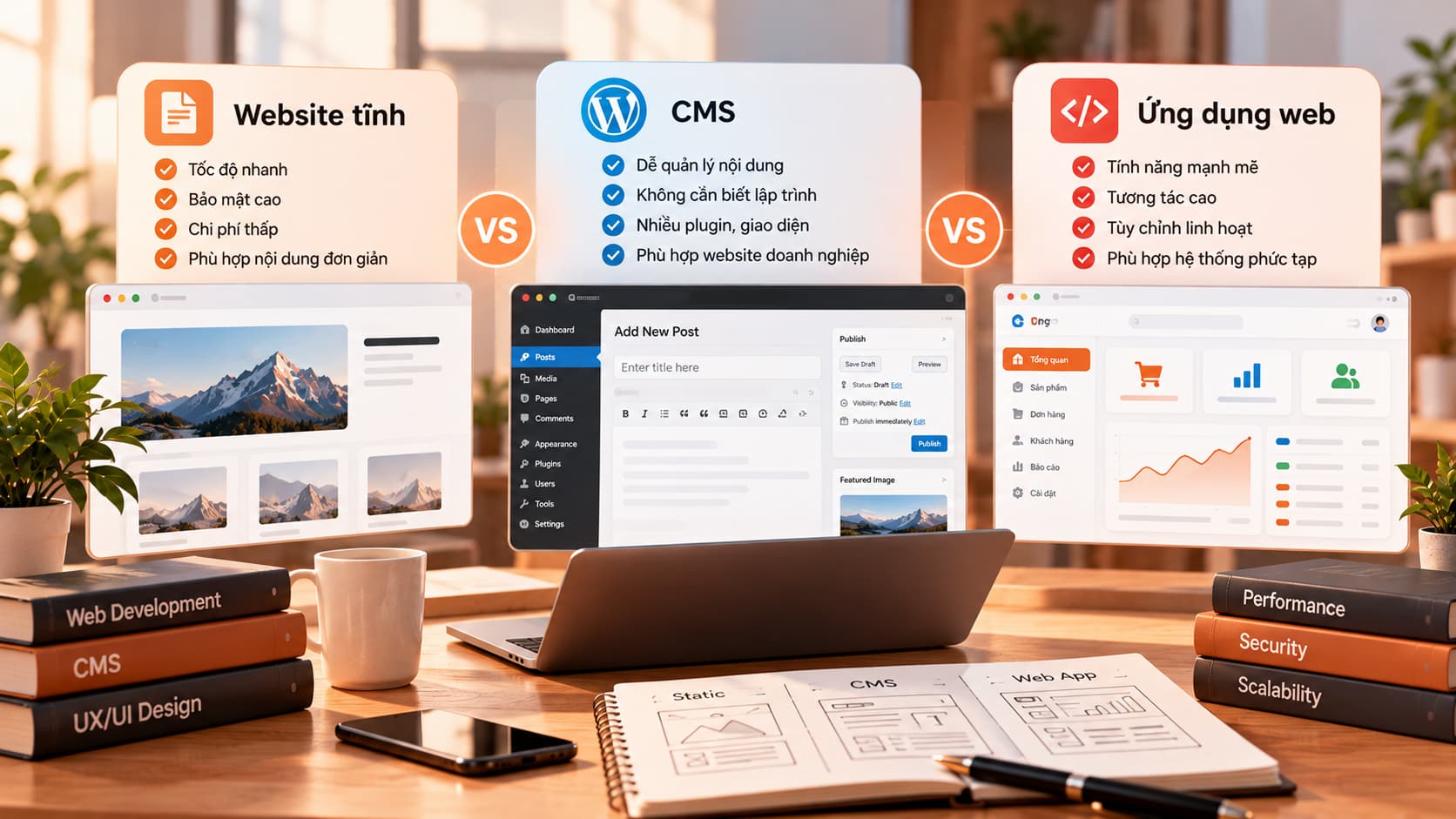
Before building a website, businesses usually have to choose between three directions: a static website, a site built on a content management system (CMS), or a custom web application. Each fits a different need, and the wrong choice can mean rebuilding a few years later. This article explains each option in plain language so you can decide with confidence.
What is a static website and when should you use one?
A static website consists of pre-built HTML pages; the server simply sends files to the browser. Today many static sites are generated with tools such as Next.js, Astro or Hugo, so they remain modern and easy to maintain at the code level.
Advantages:
- Very fast loading, since there is no processing or database query for each view.
- A small attack surface with few components to patch.
- Low hosting costs and easy to serve from a CDN.
Limitations: editing content usually requires a developer or a rebuild process. Best for company profiles, landing pages and event pages that rarely change.
Websites built on a CMS
A CMS (Content Management System) such as WordPress lets you publish posts, edit pages and manage images through an admin interface without coding. The official WordPress documentation gives a clear picture of what a popular CMS can do.
Advantages:
- Staff can update news, products and job listings themselves.
- A rich ecosystem of themes and plugins for fast delivery.
Limitations: the more plugins you install, the heavier the site and the more components need security updates. Deep customisation beyond the CMS's model can cost more than building it yourself. There is also the headless CMS approach: the admin is separate and the front end can still be published statically, combining the strengths of both.
Custom web applications
A web application is software running in the browser with its own business logic: sign-in, permissions, bookings, order management, reports, integration with internal systems… It is no longer a "page to read" but a "tool to work with".
Advantages: it matches your specific processes, scales with your needs, and gives you full control over data and experience.
Limitations: longer development time, careful requirements analysis, and a clear maintenance and operations plan.
Quick comparison
| Criteria | Static website | CMS | Web app |
|---|---|---|---|
| Load speed | Very fast | Depends on setup and plugins | Depends on system design |
| Self-editing content | Limited | Easy | Whatever features are built |
| Business features | Few | Moderate (via plugins) | Unlimited |
| Maintenance effort | Low | Moderate | Higher |
| Time to launch | Short | Short to moderate | Moderate to long |
Which one should you choose?
Answer a few questions:
- Does your content change often, and who will update it?
- Do users only read information, or do they need to sign in, act and transact?
- Does the site need to connect to internal software?
- What do you plan to add over the next few years?
If you mostly present your company and content rarely changes, a static website is the lean choice. If your team needs to publish regularly, a CMS or headless CMS fits better. If you need to digitise a workflow, think web application. Many businesses combine them: a static marketing site for speed plus a separate admin area for the parts that need interaction.
Conclusion
No option is best in every case, only the one that best fits your goals and resources. Whether you go with a static website, a CMS or a web app, defining your needs correctly from the start saves a lot of time later. If you would like to talk through the right direction, get in touch with us.